Luminary Hub Town Overview
Where vendors, storage, and the OpenZone gate meet — your return point after every exploration run.
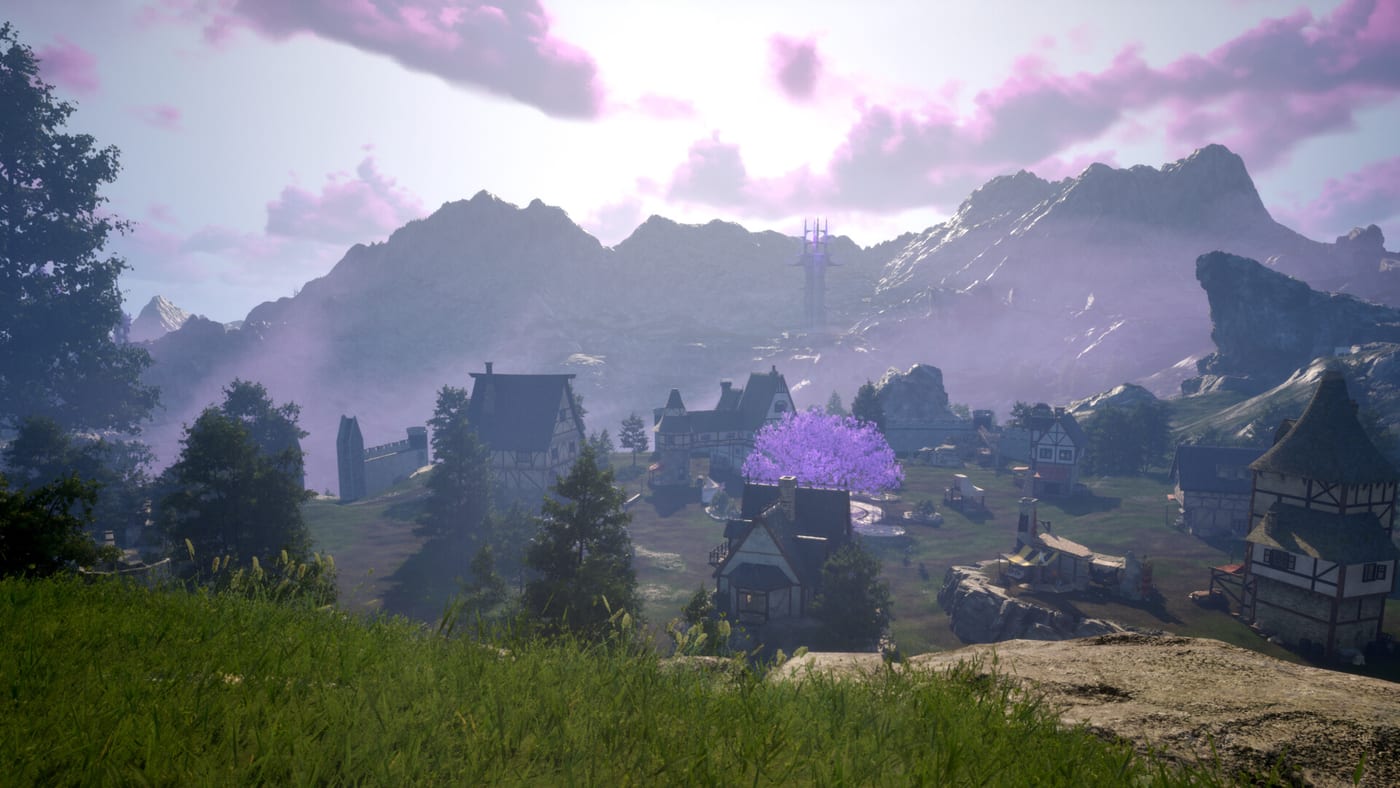
Luminary’s hub town is the calm center of Refractive Entertainment’s OpenZone ARPG-lite. After each expedition into corrupted wilds — clearing camps, scouting Towers, rescuing Life Trees — you return here to spend loot, craft meals, and plan the next compass heading. Steam Early Access launches August 11, 2026 at $19.99 with solo play and three-player online drop-in/drop-out co-op sharing town progression. Understanding hub layout in your first hour prevents the classic mistake of running past the Chef because you did not notice the plaza loop.
Hub role in the session loop
Town bookends every session. The loop from How to Play Luminary looks like this in practice:
- Spawn or fast travel to hub.
- Visit vendors — Blacksmith, Armorer, Arcanist, Chef — in an order that matches your bottleneck.
- Restock consumables and eat a Chef meal before leaving.
- Exit through the OpenZone gate toward a map goal from the Map Hub.
- Return with ore, fish, hides, and combat drops to repeat.
Hub is not a loading hub disguised as a menu. NPCs, crafting stations, and visual upgrades reflect world progress as you liberate regions. Early Access day one covers roughly half the final two-kilometer-square map, but the town you upgrade now persists through Tier difficulty after the end boss.
Vendor plaza layout
Four vendors anchor economic growth. Detailed purchase math lives in Vendors and Crafting; here is spatial orientation:
Blacksmith — weapon upgrades for Sword and Shield, Bow, and Magic Glove. Usually the highest-traffic station after a camp clear. Check here first if your primary weapon feels behind regional enemy level.
Armorer — helmets, chest, legs, and accessories. Prioritize when trash mobs delete your health bar despite good dodges. Pairs with melee block practice from Combat Basics.
Arcanist — skill tomes, reagents, and magical utilities. Not every skill is mandatory at launch; buy interrupts and mobility before cosmetic spell variants.
Chef — converts fish, crops, hunted meat, and caught critter ingredients into timed buff meals. Always visit Chef last before outbound travel so buff timers start fresh.
Walk the full plaza once per session even if you cannot afford purchases — recipe previews teach what Mining and Fishing targets matter next.
OpenZone gate and return points
The gate leading out of town marks the transition from safe hub to corruption-scaled wilderness. No separate matchmaking lobby exists for co-op: friends drop into your OpenZone instance from invites documented in How Co-op Works. Hosts should leave hub together after vendor prep so guests do not pull overworld fights under-geared.
Return mechanics typically include:
- Manual run back through cleared lanes after Tower liberation opens shortcuts.
- Fast travel nodes unlocked by regional progress — see World Overview.
- Death or retreat options that send you to hub with durability or consumable costs depending on launch tuning.
Memorize which return path is fastest after your first Tower cleanse; mid-game farming efficiency depends on minimizing dead time in transit.
Storage and inventory habits
Hub storage — whether personal chest, shared co-op stash, or vendor-linked material tracking — rewards discipline:
- Deposit ore immediately after Mining runs before accepting combat loot.
- Keep one row free for fish turn-ins to Chef.
- Sell trash at vendor-adjacent disposal only after confirming no Arcanist reagent value.
Co-op groups should agree whether the host world owns communal mats or each player feeds their own upgrades. Shared Progression clarifies what persists when guests leave mid-session.
Gathering routes starting from hub
Low-combat loops begin at town edges:
Mining — cliff faces and cave mouths within short sprint distance. Read Mining for node respawn habits.
Fishing — piers and shorelines visible from hub smokestacks or quest markers. Fishing lists species tied to Chef recipes.
Animal catching — critter habitats along the first safe road out of gate. Caught materials supplement Chef recipes alongside fish; catching suits solo wind-down or waiting for co-op friends to join.
These routes stay valid when Early Access expands the back half of the map — habits learned on day one scale forward.
Hub upgrades and visual feedback
Town reflects campaign progress visually: repaired structures, new NPC dialogue, and vendor stock refreshes after major Towers and Life Trees milestones. If a vendor offers no new recipes despite map progress, confirm you cleared linked camps — Camps and Treasures explains satellite camp requirements.
Hall of Heroes signup existed pre-launch for legacy tracking; in-game Hall systems expand after the end boss per Hall of Heroes and Endgame.
Co-op hub etiquette
- Announce vendor goals before spending shared mats.
- Craft group Chef meals at hub, not mid-fight.
- Wait for drop-in players to finish hub shopping before gate exit.
- Host verifies session difficulty matches guest gear to avoid OpenZone wipe loops.
Demo hub versus Early Access hub
The Very Positive Steam demo uses the same four-vendor structure on compressed geography. Demo players should treat hub walks as muscle-memory training for August launch. Demo Review compares demo town pacing to full Early Access loops.
When to leave hub again
You are ready to re-enter the OpenZone when primary weapon tier matches regional level, one Chef buff is active, consumable slots are full, and the party agrees on a map objective from World Overview. If any check fails, spend one more gathering loop rather than forcing a Tower pull.
Frequently Asked Questions
Quick answers to the most common Luminary questions.
What is the main purpose of Luminary's hub town?
Hub converts exploration loot into power through four vendors and gathering loops, then sends you back into the OpenZone with upgraded gear and meals.
Which vendor should I visit first each session?
Blacksmith if damage is low, Armorer if you die quickly, Arcanist for needed utilities, and Chef last before leaving for fresh buff timers.
Where do mining and fishing start from town?
Mining nodes sit near cliffs and caves just outside the gate. Fishing spots line nearby shores and piers — see Mining and Fishing guides.
Does hub progress carry in co-op?
Town vendor upgrades and shared world state persist across solo and online co-op per Refractive's shared progression design.
How does hub change after Tower liberations?
Vendor recipes, NPC dialogue, and visual repairs update as you cleanse regions and complete linked camp chains on the map.
Is animal catching done in town?
Critter catching happens along safe routes just outside hub. Ingredients feed Chef recipes alongside fish and crops.